
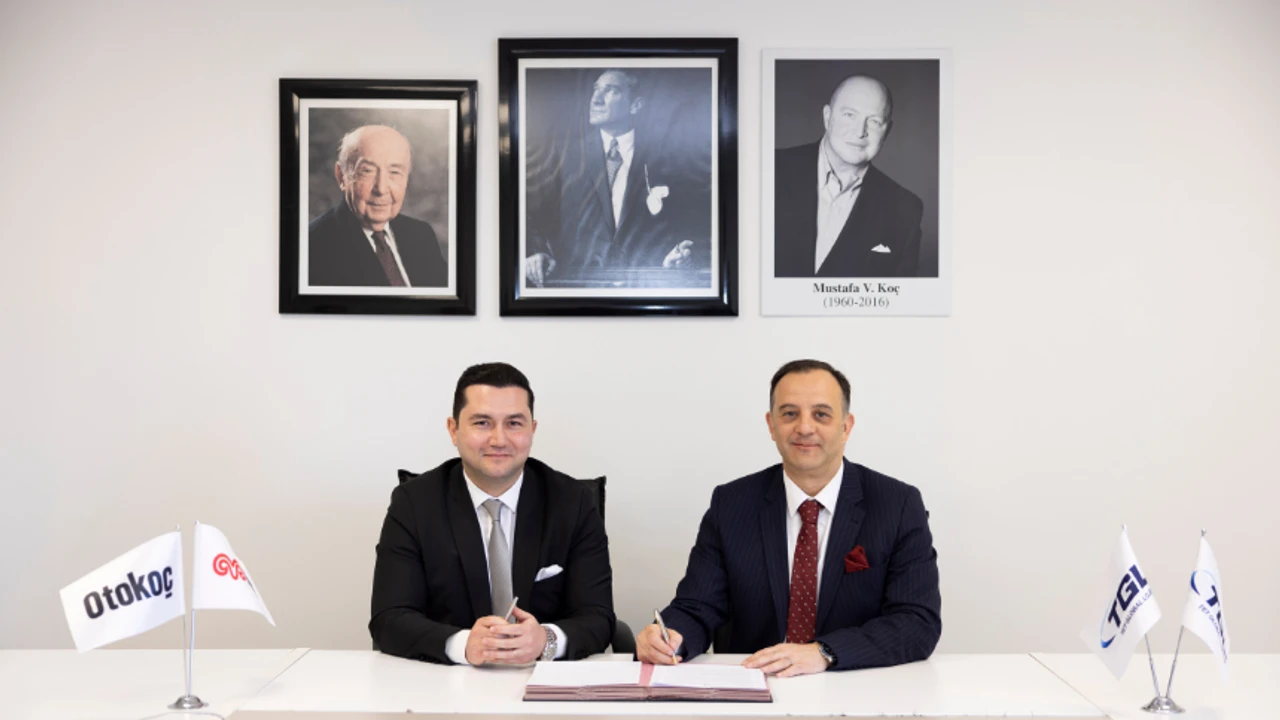
The logistics industry operates on a razor-thin margin of error where every minute of downtime translates directly into lost revenue. For companies specializing in the complex transport of bulk chemicals, maintaining a functional fleet is not just a maintenance task—it is the backbone of the entire supply chain. This is precisely why the recent strategic cooperation between Otokoç and TET Global Logistics (TGL) marks such a significant milestone in the Turkish automotive and logistics landscape. By integrating professional automotive expertise with specialized logistics operations, both parties are setting a new benchmark for operational continuity.
When we look at the mechanics of this agreement, it becomes clear that this is far more than a standard service contract. It is a customized operational solution designed to eliminate the traditional delays associated with vehicle servicing. The synergy between otokoç tet global expertise and TGL’s logistical requirements creates a closed-loop system where maintenance happens where the vehicles live, not where the workshops are located. This shift in strategy addresses the core pain point of modern fleet management: the cost of movement.
TGL Fleet Maintenance Processes are Now Managed On-Site
The traditional model of fleet maintenance requires vehicles to be driven to a service center, often resulting in hours of lost productivity and increased mileage. Under this new cooperation, the paradigm has shifted. TGL has opened its doors to specialized technical teams, allowing maintenance to occur directly within the logistics hubs. This means that a heavy-duty truck or a specialized chemical tanker no longer needs to leave its operational zone to receive essential oil changes, brake inspections, or tire rotations.
We observed that even a 4-hour delay in a service appointment can disrupt a delivery schedule for an entire day. By bringing the workshop to the fleet, the otokoç tet global partnership ensures that the “service window” aligns perfectly with the vehicle’s natural downtime. This on-site approach minimizes the logistical footprint of maintenance and keeps the focus on the primary mission: moving goods safely and efficiently across borders.
The implementation of this on-site model involves several key operational layers:
- Pre-scheduled maintenance windows aligned with driver rest periods.
- Mobile diagnostic tools brought directly to the TGL terminal.
- Real-time reporting of vehicle health to the TGL fleet management software.
- Immediate parts availability for common wear-and-tear components.
A New Era in Operational Efficiency: On-Site Service Advantages
Efficiency in logistics is often measured by the ratio of active driving hours to total operational hours. When a vehicle is stuck in traffic heading to a repair shop, that ratio drops. The cooperation between Otokoç and TGL targets this specific inefficiency. By utilizing on-site service, the company reduces the “dead mileage” — the unnecessary kilometers driven solely for maintenance purposes — which also contributes to a lower carbon footprint for the entire fleet.
Beyond the obvious time savings, there is a significant reduction in the risk of accidents. Vehicles traveling long distances to reach service centers are exposed to more road hazards. On-site servicing keeps the fleet within controlled, secure environments. Furthermore, the technical teams from Otokoç bring a level of precision that is difficult to replicate in a standard workshop setting, ensuring that every bolt and fluid level meets the rigorous standards required for chemical transport.
The advantages extend to the administrative side as well. The paperwork, inspections, and digital logs are processed on-site, meaning the fleet manager at TGL receives instant updates. There is no need to wait for a service invoice or a completion report to be mailed or emailed; the data is integrated into the workflow as the work is being performed.
Formalizing the Strategic Partnership: Key Participants
A partnership of this magnitude requires alignment between high-level executives and ground-level operational leads. The formalization of the otokoç tet global agreement involved months of technical audits and logistical planning. Representatives from Otokoç’s automotive service division worked closely with TGL’s fleet directors to map out the exact requirements for specialized chemical transport vehicles, which often require more stringent maintenance protocols than standard freight trucks.
The presence of key stakeholders during the signing ceremony emphasized the long-term vision of both companies. It wasn’t just about signing a document; it was about committing to a shared infrastructure. The technical teams, the logistics planners, and the safety officers all played a role in defining the scope of this cooperation. This collaborative spirit ensures that when a challenge arises—such as a sudden surge in seasonal demand—the partnership is already equipped with a pre-agreed response plan.
Key participants in this strategic alignment include:
- Otokoç Automotive Service Management: Providing the technical expertise and mobile workshop infrastructure.
- TET Global Logistics Fleet Operations: Managing the scheduling and site access for the maintenance teams.
- Supply Chain Safety Officers: Ensuring all on-site activities comply with chemical transport regulations.
Sustainable Growth in the Logistics and Automotive Sectors
Sustainability is no longer a buzzword; it is a functional requirement in the 202s. The otokoç tet global initiative contributes to environmental goals by reducing fuel consumption through optimized vehicle health. A well-maintained engine burns less fuel, and a properly aligned tire reduces rolling resistance. In the context of logistics, these small percentages of efficiency aggregate into massive reductions in CO2 emissions over a fleet of hundreds of vehicles.
Furthermore, the economic sustainability of the partnership is built on predictable cost structures. Traditional maintenance is often reactive—you fix things when they break, which is the most expensive way to operate. This cooperation promotes a proactive, predictive maintenance culture. By identifying potential failures before they occur, TGL avoids the catastrophic costs of roadside breakdowns and emergency repairs, which can be three to five times more expensive than scheduled on-site service.
This model also supports the growth of the local automotive ecosystem. By investing in mobile service capabilities and specialized training, the partnership creates a more resilient service network that can be scaled as TGL expands its operations into new territories. The scalability of this model is a core component of the long-term strategy for both organizations.
Comparative Analysis: Traditional vs. On-Site Service Model
To truly understand the impact of this cooperation, one must compare the old way of doing things with the new on-site reality. The traditional model relies on the “Bring-In” method, where the burden of logistics is placed on the fleet owner. The “On-Site” method, pioneered by the otokoç tet global alliance, places the burden on the service provider, moving the expertise to the asset.
| Feature | Traditional Workshop Model | TGL On-Site Service Model |
|---|---|---|
| Vehicle Downtime | High (Travel + Waiting + Service) | Minimal (Service only during scheduled breaks) |
| Operational Cost | Unpredictable (Reactive repairs) | Predictable (Scheduled maintenance) |
| Mileage Impact | Increased (Extra kilometers for service) | Zero (Service happens at the hub) |
| Risk Management | Higher (More road exposure) | Lower (Controlled environment) |
The data suggests that the transition to on-site service significantly stabilizes the supply chain. While the initial setup of mobile units requires a higher level of coordination, the long-term ROI is evident in the reduction of “unplanned” events. For a logistics company, stability is the ultimate currency.
Driving the Future of Fleet Management
The partnership between Otokoç and TET Global Logistics is more than a service agreement; it is a blueprint for the future of the industry. As logistics becomes increasingly complex and the demand for zero-error execution grows, the ability to integrate maintenance directly into the operational flow will become the standard. The otokoç tet global model proves that when two industry leaders align their strengths, the result is a more resilient, efficient, and sustainable supply chain.
We invite you to follow our journey as we continue to innovate in the automotive and logistics sectors. For more information on how our specialized solutions can transform your fleet operations, please contact our partnership team today.
